

Introduction
What separates businesses that adapt instantly from those that lag? The truth is, with the break-neck pace of change in business today, firms need a flexible, future-ready infrastructure more than ever.
Enter cloud computing solutions simply put, services that let you access computing power, storage and applications over the internet instead of maintaining everything in-house. And they matter right now because business models are changing fast: remote work, global teams and digital expectations are here to stay.
In this article we’ll explore the urgency behind the shift, the key benefits, how to implement it and how to stay ahead of what’s coming.
Why the Time Is Now for Cloud Infrastructure
The world has changed and businesses need to keep up.
- Remote work and dispersed teams are no longer the exception; many companies now work across multiple time-zones, offices and even continents.
- Demand is unpredictable: seasonal spikes, new product launches, global access all require flexibility.
- According to recent data, the global market for cloud computing solutions is projected to grow from around US$ 738 billion in 2025 to roughly US$ 1.6 trillion by 2030.
- Around 94 % of enterprises report using some form of cloud service already.
- Modern business models disruptive, digital, agile simply cannot afford to rely solely on legacy IT infrastructures anymore. If you’re still locked into on-prem servers, rigid software and slow manual upgrades, you’re at a disadvantage.
So if you’re asking why now, the answer is: the business environment demands it, competitors are doing it and staying static is riskier than ever.
Core Advantages That Make Cloud Computing Solutions Essential
Here are the real reasons why smart businesses are adopting cloud infrastructure:
a. Agility & Scalability
- With cloud services you can scale up resources when demand surges, and scale down when things are slow. You’re no longer paying for unused servers or scrambling when traffic spikes.
- The ability to spin resources up or down means you respond faster to new opportunities.
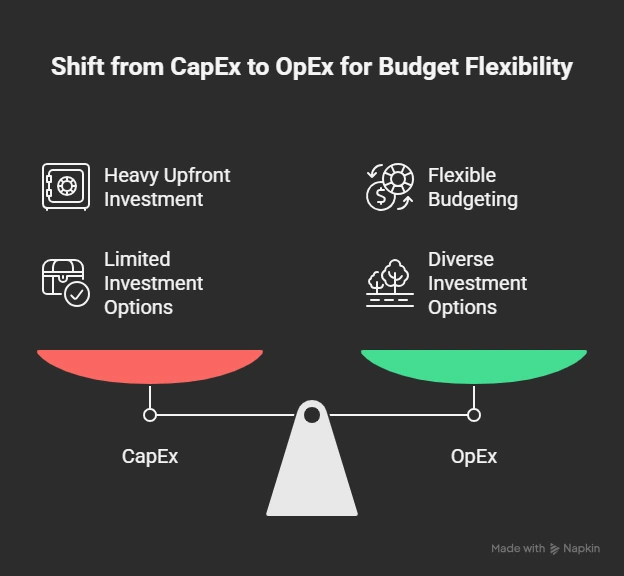
b. Cost-Efficiency & Pay-as-you-Go
c. Enhanced Productivity & Collaboration
- Teams, apps and data become accessible anywhere, anytime enabling remote, hybrid or global work.
- Faster innovation: developers, operations and business teams can deploy and test faster because infrastructure is ready-to-go in the cloud.
d. Resilience & Data Protection
- Built-in disaster recovery, redundancy and business continuity are major perks. If your infrastructure fails locally, your cloud-based systems can keep you running.
- This is where cloud backup solutions for business come into play backing up your data in the cloud rather than relying only on on-site tapes or hardware.
e. Data-Driven Insight & Strategic Growth
- Using cloud platforms you can access advanced analytics, big-data processing and real-time insights. That’s where cloud business intelligence solutions help enabling decision-makers to see trends, customer behaviors and operational efficiency in ways they could not before.
- Essentially: better data = smarter decisions = competitive advantage.
Real-World Business Use Cases & Success Stories
Let’s bring this into real life:
E-commerce scaling during peak demand
- For a retail brand anticipating massive seasonal spikes such as during the holidays or major promotions the right infrastructure is critical. Utilizing modern cloud computing solutions, they can effortlessly provision and manage additional servers to handle traffic bursts, ensuring flawless speed and performance during peak demand. Afterward, they simply scale resources back down. Compare this to the legacy model, where the brand would be forced to either over-invest in expensive, static hardware or suffer damaging slowdowns when they can least afford it.
Service companies using mobile access & global teams
- A consulting firm with teams in London, Manila and New York uses cloud apps so staff access client data, collaborate in real time and deliver faster. Legacy model? VPNs, on-site servers, slow updates, messy remote access.
Start-ups launching globally
- A tech start-up launches in multiple countries. They skip local data centers, spin up cloud services in each region, focus on growth not infrastructure. Legacy model? Huge barrier to entry.
Before vs After – quick table:
| Situation | Legacy Infrastructure | Cloud-Enabled Infrastructure |
| Launching a new product globally | Buy/lease servers regionally → slow deployment | Spin up cloud resources globally in hours |
| Responding to traffic surge | Risk overload or invest in idle capacity | Scale dynamically, pay when needed |
| Remote/hybrid workforce access | VPNs + on-site systems → slower, complex | Cloud apps accessible from anywhere |
| Recovery from outage | Risk downtime, data loss | Fail-over in cloud backup, redundancy built-in |
The difference in speed is undeniable: the ability of a small business to pivot using cloud computing solutions versus relying on the old, rigid model is a critical competitive advantage. Businesses that embrace the agility of modern cloud computing solutions become inherently more resilient, significantly more competitive, and fully ready to meet future demands.
How to Choose & Adopt the Right Cloud Strategy
Here’s a simple step-by-step for business leaders ready to act:
Define business outcomes & metrics
- What do you want? Faster time to market? Lower costs? Better global reach? Define success in measurable terms.
- Example: “Reduce infrastructure spend by 25 % in 12 months” or “Support global rollout in 3 continents within 6 months”.
Choose service model & deployment
- Service models: IaaS (Infrastructure-as-a-Service), PaaS (Platform-as-a-Service), SaaS (Software-as-a-Service).
- Deployment types: Public cloud, private cloud, hybrid cloud. Consider where you need control, compliance and cost-efficiency.
Assess vendor features, cost, SLAs, integration
- Which cloud providers offer the reliability, data centre locations, compliance and support you need?
- Understand their pricing model, hidden costs (eg. data egress fees), SLAs for uptime, access speeds.
- Check how well your current systems will integrate with the cloud provider.
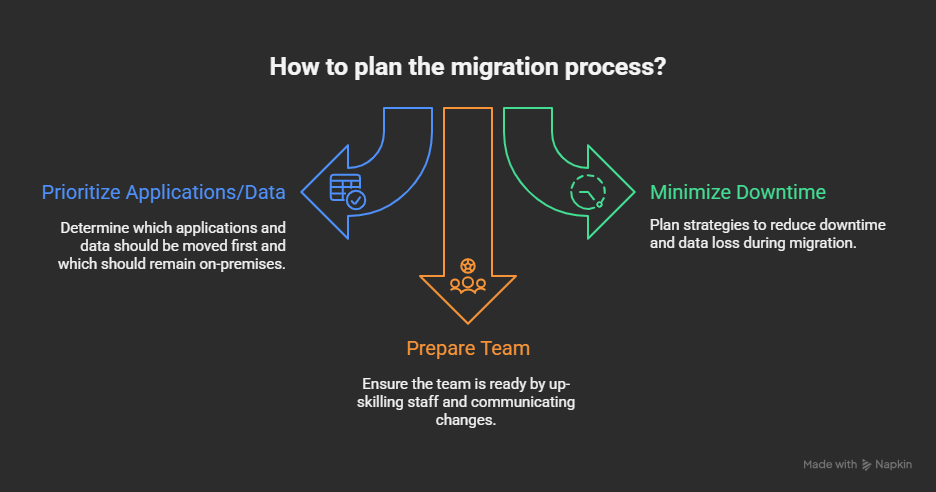
Plan migration: data, applications, change management
Measure success: usage, ROI, agility improvements
- After going live, measure key metrics: system uptime, cost savings achieved, how fast you can deploy new services, user satisfaction.
- Use those insights to refine further: scale, optimise, plan next phases.
Common Pitfalls & How to Avoid Them
When migrating to cloud infrastructure you might run into some traps but you can plan ahead:
Security, compliance and data governance risks
- Challenge: If you move data to cloud and don’t manage access, encryption or compliance, you could face breaches or penalties.
- Mitigation: Choose providers with strong security controls, implement governance policies, audit access and ensure regulatory compliance.
Skill-gaps and organisational resistance
- Challenge: Teams used to legacy systems may resist change or lack the skills for cloud operations.
- Mitigation: Invest in training, involve stakeholders early, create change champions and communicate benefits clearly.
Hidden costs and monitoring spend
- Challenge: Cloud pricing is flexible but can also lead to unexpected bills (e.g., data transfer fees, idle resources).
- Mitigation: Monitor usage, set budgets/alerts, optimise for resource usage and remove idle services.
Vendor lock-in and migration complexity
- Challenge: Once you commit to one cloud provider or architecture, shifting later can be difficult and costly.
- Mitigation: Consider multi-cloud or hybrid strategies, choose open standards, structure architecture to allow future flexibility.
Future Trends What Comes Next (and Why This Makes Adoption Now Even More Important)
Let’s look ahead:
- Multi-cloud & Edge computing: Businesses are using more than one cloud provider and moving compute closer to users/devices (edge) for speed and efficiency
- AI integration: Cloud platforms are increasingly offering AI, machine learning and analytics as built-in services. Having cloud infrastructure ready means you’re ready for this wave.
- Hybrid work realities: As remote and hybrid working become standard, cloud infrastructure becomes the backbone of flexible operations.
- Sustainability & green cloud: Cloud providers are investing in energy-efficient data centers and eco-friendly infrastructure; your strategy should factor in sustainability as a differentiator.
- Regulation & data sovereignty: With growing data privacy regulations, businesses need infrastructure that supports jurisdictional data storage and compliance.
The key point: The sooner you adopt cloud infrastructure, the better positioned you are to ride these trends instead of scrambling to catch up later.
Conclusion
To wrap it up: For every modern business, adopting cloud computing solutions isn’t optional it’s a strategic imperative. The marketplace is moving fast, customers expect flexibility and competitors are already leveraging the cloud to out-pace you.
Now is the time to act: review your current infrastructure, define your goals, map your cloud strategy and make the move.
Ready to future-proof your business? Contact Tech Support Plus IT Services today for smart cloud solutions that scale with you.