
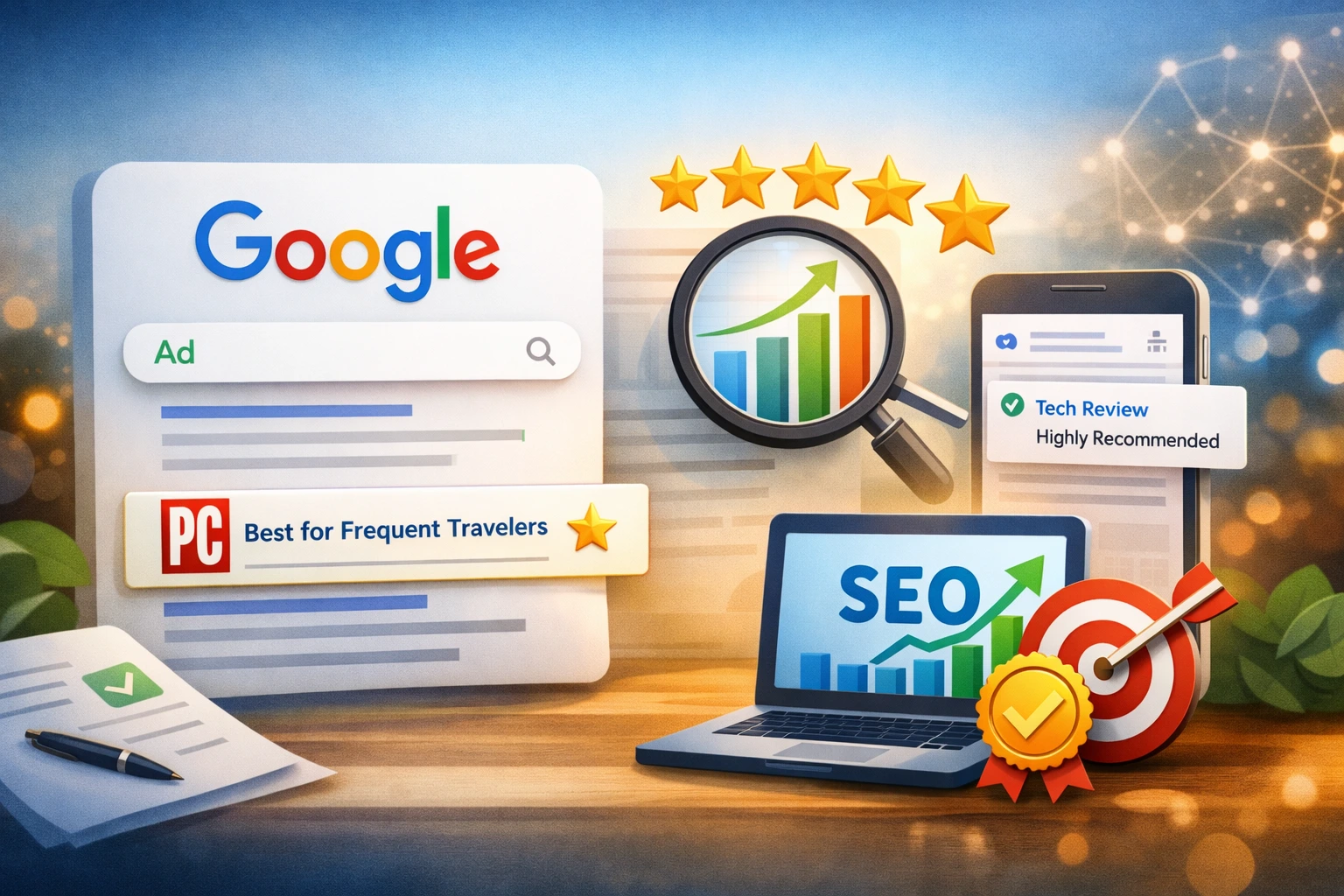
Google is experimenting with adding third-party endorsements directly inside Google pay per click ads, a move that could change how advertisers approach pay per click advertising campaigns.
This notable test, spotted in early 2026, places short endorsement quotes complete with publisher names, logos, and favicons underneath the ad description. The goal: introduce external validation into paid search results.
Here’s what this means, how it could affect your pay per click ads, and what advertisers should be watching closely.
What’s New: Endorsements Inside Google Pay Per Click Ads
In a first of its kind experiment, Google has begun showing third-party endorsement content directly within Search ads.
Instead of relying solely on advertiser descriptions, users may soon see short phrases like “Best for Frequent Travelers” right below the ad text attributed to reputable publishers such as PCMag and others.
This was first noticed by Sarah Blocksidge, Marketing Director at Sixth City Marketing, who shared a screenshot on Mastodon showing exactly how the new element appears. In the example, a Google Search ad displayed the line:
Best for Frequent Travelers — PCMag
This line showed up beneath the advertiser’s own description, separated visually so users clearly understood it was third-party praise not ad copy written by the advertiser.
Google confirmed the test with a spokesperson, calling the feature “a small experiment we are currently running that explores placing third-party endorsement content on Search ads.”
However, Google did not share details about how endorsements are selected, who qualifies, or whether advertisers can influence the process.
Why This Matters for Pay Per Click Advertising Campaigns
If this experiment becomes more than a test, it could reshape how brands think about google pay per click ads.
Here’s why it matters:
1. Builds Trust at the Moment of Search
One of the biggest challenges in pay per click advertising campaigns is converting users who are skeptical of ads.
Third-party endorsements act like built-in credibility signals, similar to product reviews or expert recommendations. This could:
- Increase click-through rates (CTR)
- Improve user engagement
- Boost conversions
Instead of relying solely on your written ad messaging, Google could now amplify external praise directly in the search result.
2. Creates Differentiation in Competitive Auctions
In competitive keyword auctions where many advertisers bid on the same terms, having a trusted source highlight your offering could give you an edge.
This matters especially in industries with:
- High search intent (travel, tech, finance, healthcare)
- Strong brand comparisons
- Intense competition for clicks
A third-party endorsement could be the tiebreaker that pushes users to click your ad over the next result.
3. Shifts Focus from Advertiser Claims to External Validation
Traditionally, your PPC success depended largely on how well you worded your ad copy headlines, CTAs, benefits, differentiators.
Now, Google may be experimenting with adding external voices as part of your ad presence turning search ads subtly closer to reviews or editorial snippets.
Expert Insight: What Businesses Should Do Next
At Tech Support Plus IT Services, we believe this experiment signals a broader shift in how paid search may evolve over the next few years.
Here’s our view:
Start Building Third-Party Trust Signals Now
Even if this test doesn’t roll out widely, the trend toward credibility in PPC is clear.
Brands should start:
- Encouraging reputable publishers to review products/services
- Collecting and syndicating reviews where possible
- Linking endorsements in other marketing channels
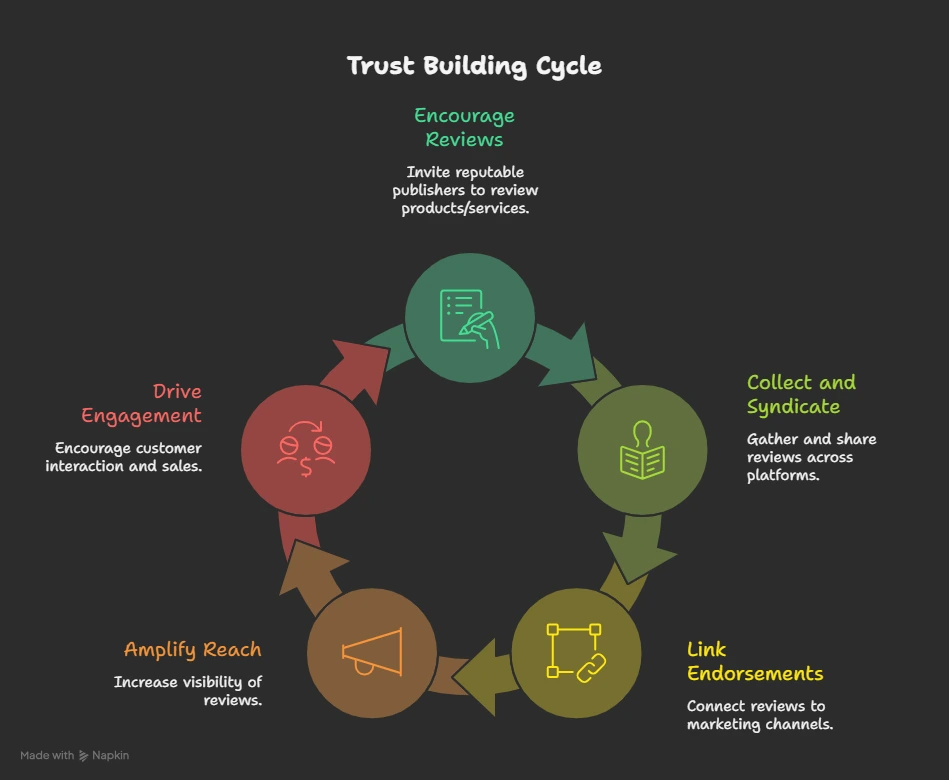
This helps lay the groundwork so that when endorsement features become available, you’re already positioned to benefit.
Enhance Ad Extensions and Assets
While we wait for full rollout details, make sure your google pay per click ads include the strongest possible extensions:
- Sitelinks
- Structured snippets
- Callouts
- Review extensions (where available)
These help improve visibility and provide validation inside your ad even without endorsement quotes.
Monitor Performance Trends
If you’re currently running PPC campaigns:
- Watch CTR and conversion rates closely
- Track quality score fluctuations
- Test messaging that highlights accolades or rankings
These insights will help you pivot quickly if Google opens this endorsement feature to more advertisers.
What We Still Don’t Know
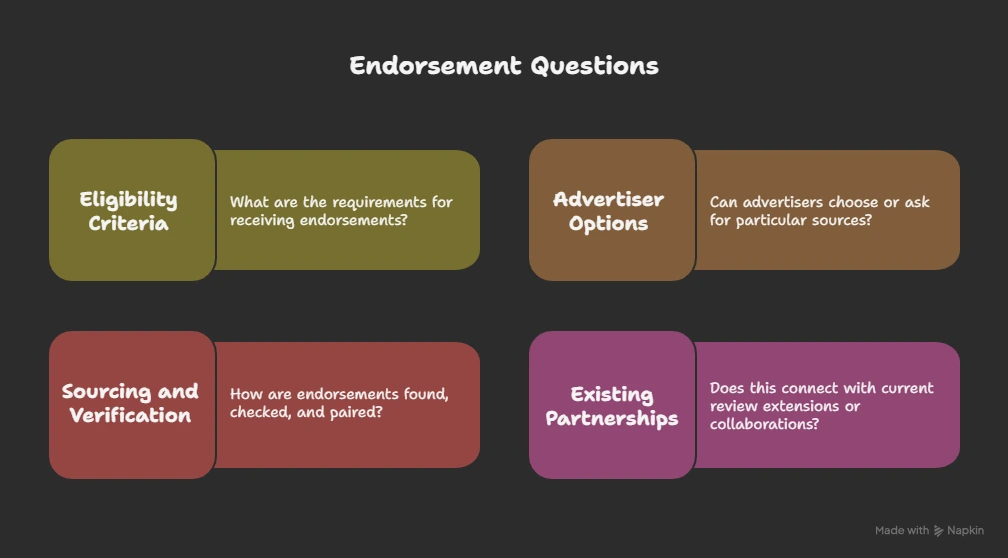
At this point, Google hasn’t revealed:
- Eligibility criteria for endorsements
- Whether advertisers can opt in or request specific sources
- How endorsements are sourced, verified, and matched
- If this ties into existing review extensions or partnerships
Because of this, the rollout could take many forms or remain limited to tests.
What to Watch in the Coming Months
Keep an eye on:
- Whether endorsements appear more frequently
- Which industries get prominence first
- Any announcements from Google Ads
- Competitive shifts in click-through trends
If third-party credibility becomes a visible factor, we may see advertisers shifting budget toward high-trust positioning, not just low CPC bids.
Your Next Step
Want help optimizing your pay per click advertising campaigns for this potential change?
Contact Tech Support Plus IT Services today to audit your current PPC setup, strengthen your ad assets, and prepare your campaigns for the future of Google Search ads.