
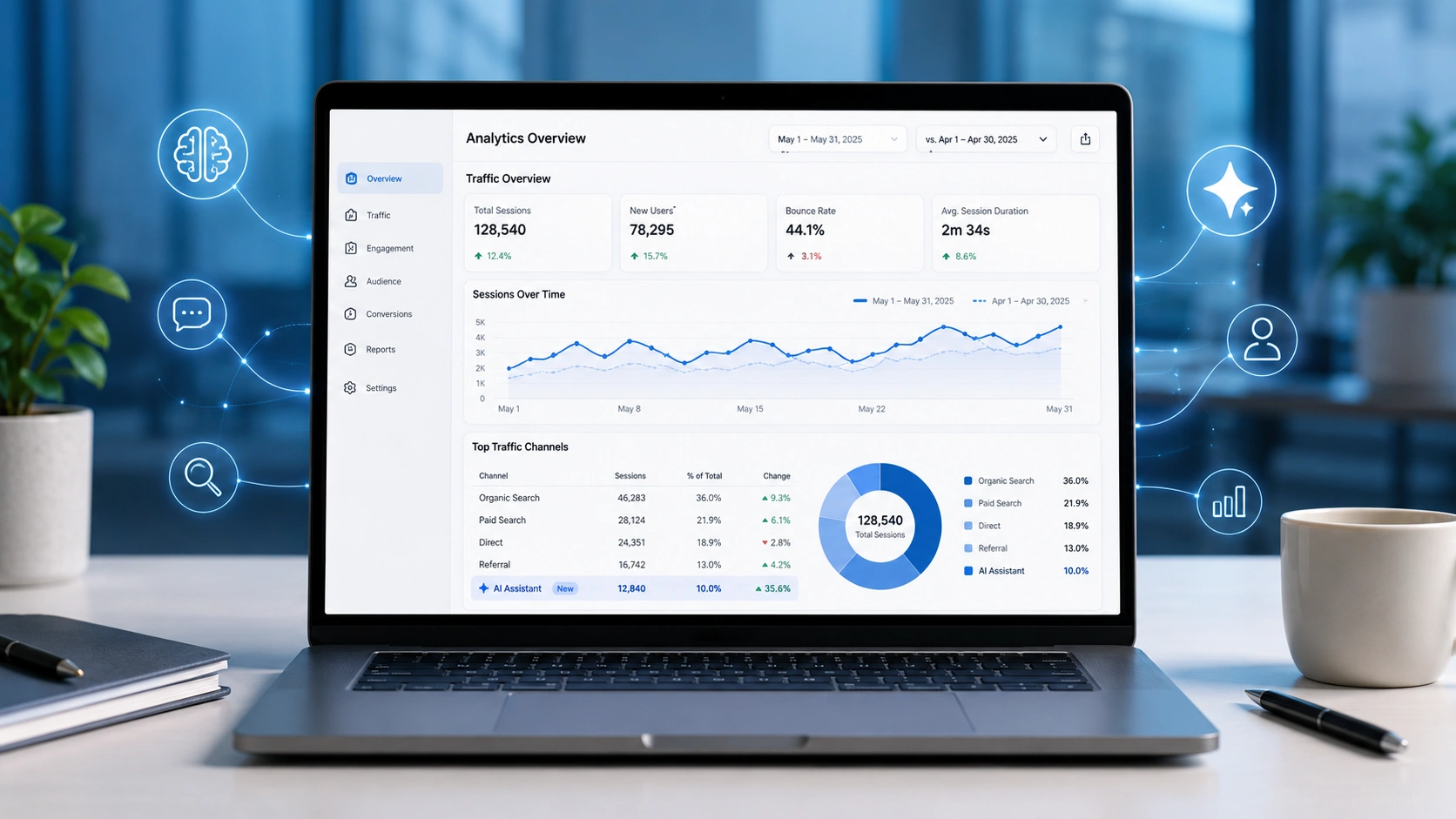
Digital marketing teams have another reporting update to watch. Google Analytics 4 has added an AI Assistant default channel group, giving website owners a clearer way to see visits that come from recognized AI tools.
As more people use chatbots to search, compare, and discover brands, this change gives businesses a better view of how users are finding their websites beyond traditional search and referral traffic. GA4 now identifies traffic from recognized AI assistant referrers and groups those sessions under a new AI Assistant channel.
Google named ChatGPT, Gemini, and Claude as examples of recognized sources, although the full referrer list has not been made public. This means the update is helpful, but it may not capture every visit that started from an AI tool.
What Changed in Google Analytics 4

Before this update, many chatbot-driven visits were placed inside the general Referral channel. That made it harder for marketers and business owners to separate normal website referrals from visitors who came through AI assistant recommendations.
The new channel changes that process. When GA4 detects a recognized AI assistant referrer, it can assign the medium value “ai-assistant.” Those sessions are then organized under the AI Assistant channel in Default Channel Group reports. The change happens automatically, so property owners do not need to create a custom setup just to see this traffic.
This is an important reporting improvement because AI-assisted discovery is becoming part of the customer journey. A user might ask a chatbot for product suggestions, business comparisons, service recommendations, or answers to a specific problem. If the AI tool links to a website, that visit can now be easier to identify in GA4 when the referrer is recognized.
Why This Matters for Digital Marketing Reports
This update matters because accurate traffic reporting helps businesses make better decisions. If visits from AI assistants are mixed with regular referral traffic, teams may not clearly understand how much visibility they are getting from AI-driven discovery.
With a separate AI Assistant channel, businesses can start comparing this traffic against organic search, paid search, social media, direct traffic, and other channels. They can check whether AI visitors stay on the site, view important pages, complete forms, request quotes, or convert into leads.
The update also helps marketers understand how content is performing in a changing search environment. If a blog post, service page, or guide receives visits from AI assistants, that may show that the content is useful, clear, and relevant enough to be surfaced in AI-led conversations. This can help teams decide which pages need improvement and which topics deserve more attention.
What Businesses Should Know
The new channel does not mean all AI traffic will be perfectly tracked. However, visits without a referrer header may still appear as Direct traffic. This may occur when visitors access links from mobile apps, built-in browsers, or URLs they copied and opened manually.
Because of this, businesses should avoid treating the AI Assistant channel as the full picture. It is better to use it as one helpful signal. Website owners should review landing pages, engagement rates, conversions, Search Console data, and campaign reports together. A wider view will make the numbers easier to understand.
The update also shows that brands should not ignore AI visibility. Search behavior is expanding. People still use search engines, but they also ask AI tools for quick explanations and recommendations. If your content is thin, unclear, outdated, or difficult to understand, it may struggle to earn attention in this new environment.
How Teams Can Respond
The first step is to check GA4 reports and look for the AI Assistant channel. If it appears, review which pages receive that traffic. Look for patterns. Are visitors going to blog content, service pages, pricing pages, or contact pages? Are they engaging with the site, or leaving quickly?
Next, review the quality of your content. Strong pages should answer real questions, explain services clearly, and guide users toward the next action. Avoid vague claims and focus on helpful information. Clear headings, simple language, structured answers, and updated details can all support stronger visibility.
Businesses should also review conversion tracking. AI assistant traffic is useful only when you can connect it to actions that matter, such as calls, form submissions, bookings, or purchases. Without conversion tracking, the new channel may show visits, but not the real business impact.
Turning Better Analytics Into Smarter Business Decisions
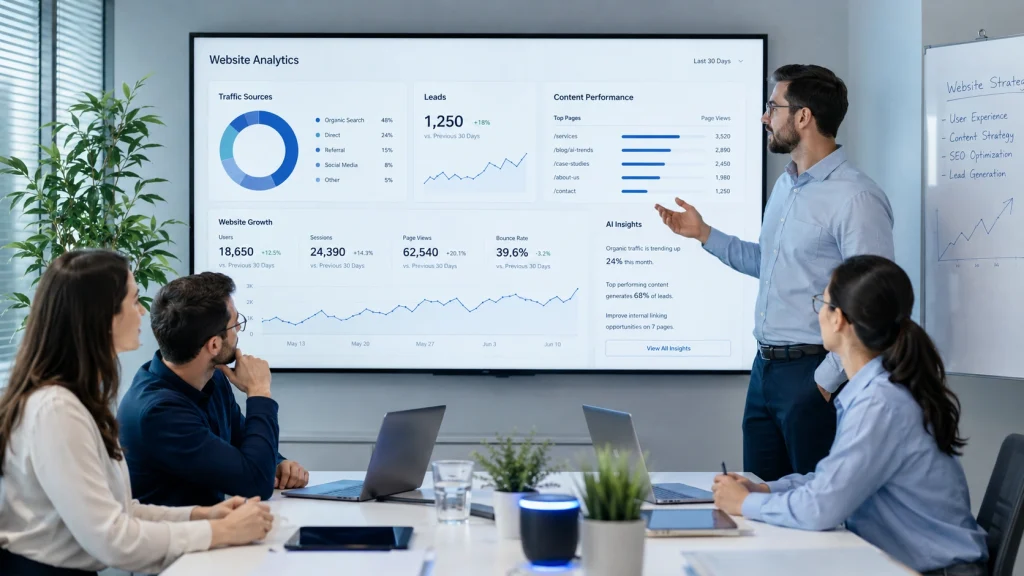
GA4’s new AI Assistant channel is a useful step for businesses that want cleaner traffic reporting. It gives teams a better way to separate recognized AI assistant visits from general referral traffic and understand how AI-driven discovery may influence website performance.
Still, this should not be treated as a complete solution. Some AI-related visits may remain hidden under Direct traffic, and Google has not published the full list of recognized referrers. The best approach is to use this new report together with other analytics data, content performance, and lead tracking.
If your business wants clearer reporting, stronger content, and practical digital marketing solutions, contact Tech Support Plus IT Services, we can help you review your website performance and identify better ways to turn traffic into real inquiries.