

Stop Running on Empty: The Future of Pay Per Click Is Now (and You Need to Catch Up!)
Are you still managing your paid ads like it’s 2018? Are you spending hours manually adjusting bids, feeling like you’re constantly behind the curve, and crossing your fingers that your campaigns will hit their targets?
If you answered yes, you’re not alone, but here’s the tough truth: the world of pay per click advertising is evolving faster than ever before. What worked six months ago is already becoming outdated. We’re seeing an explosive shift driven by artificial intelligence, new data privacy laws, and the total dominance of mobile and video content. Ignoring these trends isn’t just risky; it means you’re leaving money on the table for your competitors to grab.
So, what exactly is “pay per click” (PPC) today? It’s far more than just Google Search Ads. It’s an ecosystem where you pay only when a user clicks on your ad across search engines, social media feeds, e-commerce platforms, and even short-form video apps. It’s the engine of digital growth, but the rules are changing.
This isn’t just another trend report. This is a battle plan. We’re going to break down the major shifts in automation, data, ad formats, and channel strategy, including a crucial look at what this means for marketers right here in Southeast Asia (SEA) and the Philippines. Get ready to transform your strategy from reactive to predictive.
Where We Are Today: A Quick PPC Snapshot
Before we jump into the future, let’s quickly look at the current landscape. PPC has traditionally been the go-to performance channel, focused on high-intent users.
The Classic PPC Playbook
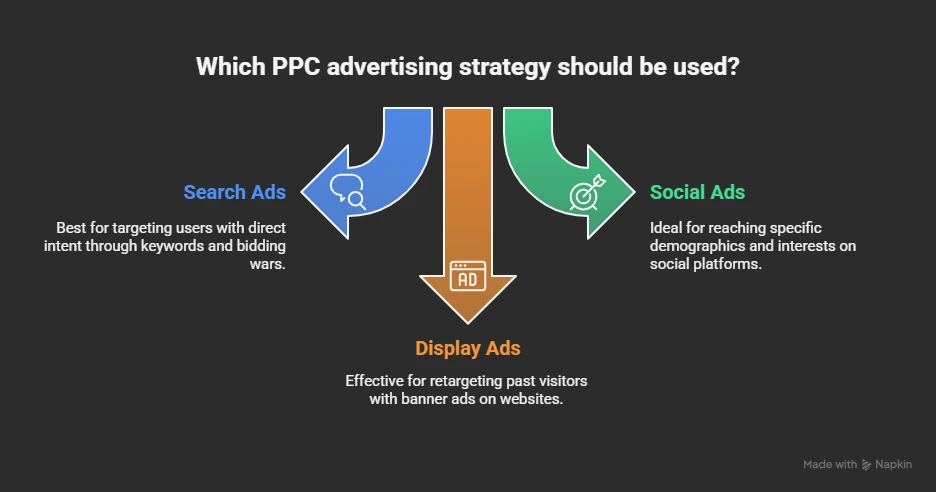
A “classic” campaign optimization looks like weekly manual checks: pausing poor keywords, adjusting bids, and refreshing ad copy based on simple metrics like Click-Through Rate (CTR) and Cost Per Click (CPC). This baseline is what most marketers use, but it relies on humans doing repetitive tasks that computers are now mastering. The future is moving beyond this manual grind.
Major Trend 1: AI & Automation Transform Campaign Execution
The single biggest change is the shift from manual management to strategic oversight. Machine learning and automated bidding are no longer optional extras; they are the new standard.
The Rise of AI-First Campaigns
Platforms like Google’s Performance Max or Meta’s Advantage+ are using AI to make thousands of real-time decisions that no human team could ever match.
- Targeting: AI looks at signals like time of day, location, device, and even predicted future value (Lifetime Value or LTV) to decide if a user is worth a bid, moving way beyond simple demographic lists.
- Bidding: Automated bidding is now about value-based bidding. You tell the system the value of a conversion (e.g., a high-value customer sign-up is worth more than an email lead), and the AI optimizes your spend to maximize that value, not just the number of clicks.
- Creative: Dynamic Creative Optimization (DCO) means the ad you see might have a different headline, image, or call to action than the ad your friend sees, all auto-generated and tested by the machine to find the perfect combination for that specific moment.
Your Action Plan to Prepare Now
- Embrace Smart Bidding: Move your campaigns to automated bidding strategies like Target ROAS or Maximize Conversion Value. Stop trying to outsmart the machine on manual bids you won’t win.
- Invest in First-Party Data: The AI is only as good as the data you feed it. Make sure your CRM data, your email lists, and your website conversions are cleanly flowing back into your ad platforms. This becomes your secret weapon.
- Over-Furnish Your Creative: Since the AI is testing countless combinations, you need to provide it with a deep library of headlines, descriptions, images, and videos. Give the AI more ingredients to work with.
Major Trend 2: Data Privacy, Cookieless Web & Audience-Driven Targeting
The party is ending for third-party cookies. Driven by major platforms like Google and stricter privacy laws like GDPR and CCPA, the way we track users across the web is fundamentally changing.
The Cookie Crumble and Its Impact
The move away from third-party cookies means you can no longer rely on tracking a user’s journey across unrelated websites to retarget them. This is forcing a massive strategic pivot.
- Less Reliance on Broad Tracking: Campaigns based on “browsed competitor site X” are becoming less effective.
- More Focus on First-Party Data: The data you collect directly from your customer with their consent (email sign-ups, purchase history, app usage) is your most valuable asset.
- Contextual and Predictive Targeting: We’re seeing a return to contextual targeting (placing ads on pages relevant to your product, not the user’s history) and an increase in predictive modeling, where AI guesses a user’s intent without needing specific personal tracking data.
Action Steps: Build Your Data Foundation
- Refresh Your Strategy: Stop relying on massive, cold audience lists. Focus on building and activating high-quality customer lists using your own data.
- Implement Server-Side Tagging: This allows you to measure conversions more accurately on your own server, instead of relying solely on the user’s browser, bypassing many privacy restrictions.
- Be Compliant and Transparent: Your customers are demanding transparency. Make sure your cookie consent and privacy policies are clear and compliant, building trust rather than breaking it.
Major Trend 3: New Ad Formats & Channels: Voice, Video, Mobile-First
The format of pay per click ads is diversifying rapidly beyond text and simple banners. Our audience is living in short-form video, using voice commands, and expecting highly interactive, mobile-first experiences.
The Visual and Verbal Revolution
Short-Form Video
Platforms like TikTok, YouTube Shorts, and Instagram Reels have made vertical, short-form video the dominant form of content. Your ads need to look and feel native to these feeds less polished TV commercials and more authentic content.
Voice Search
With the growth of smart assistants (Google Home, Alexa), search queries are becoming longer and more natural (“Hey Google, where can I buy a cheap laptop near me?”). PPC strategies must include long-tail, conversational keywords.
Interactive and Shoppable Ads
Ads are becoming less about a static message and more about an experience. Think in-ad polls, swipe-up catalogs, and live video shopping that let users purchase directly without leaving the platform.
Practical Advice for Testing New Formats
| Strategy | New Format to Test | Key Metric to Watch |
| Mobile-First | Vertical Video Ads (Reels, Shorts) | Video View Rate, Muted Play Rate |
| Intent-Driven | Voice Search Keywords | Conversion Rate on Long-Tail Queries |
| E-Commerce | Shoppable Ads (Product Feeds) | Return on Ad Spend (ROAS) |
You must adjust your creative and landing pages. A click from a short-form video needs to go to a lightning-fast, mobile-optimized landing page, not a slow-loading desktop site. Speed is conversion.
Major Trend 4: Multichannel and Integrated Campaign Ecosystems
The era of running a “Google Ads campaign” and a “Facebook Ads campaign” in isolated silos is over. The modern customer journey is complex, jumping from a TikTok video to a Google Search to a website visit before converting. Future campaigns must be multichannel.
The Holistic Strategy Imperative
You can’t treat search and social media as separate budget lines anymore. They work together.
- Branding + Performance: Social ads build awareness (branding) and drive new search demand. Search ads capture that demand (performance). A holistic strategy manages them as a single ecosystem.
- Cross-Platform Attribution: The challenge is knowing which ad deserves credit. Did the Facebook ad start the journey, or was it the final Google Search ad that sealed the deal? The answer is often both. Modern marketers need to use advanced attribution models to understand the incremental lift of each channel.
Checklist: Integrating Your Channels
- Unified Audience Strategy: Use your first-party data (CRM/email lists) to create consistent audiences across all platforms (Google, Meta, TikTok, etc.).
- Harmonize Creative Messaging: Ensure the visual style and core message of your video ads and your search ad copy align. The user shouldn’t feel like they’re seeing two different brands.
- Allocate Budget Dynamically: Use portfolio-level bidding goals and cross-platform reporting to shift budget from the low-performing channel to the high-performing one in real-time, regardless of which platform it is.
Major Trend 5: Regional/Local Markets & Emerging-Market Dynamics
While many global reports focus on the US/Europe, the future of pay per click in markets like the Philippines and Southeast Asia (SEA) has critical, unique nuances you cannot ignore.
The SEA Difference: Mobile, Social, and Cost
The Philippines is one of the world’s most digitally engaged countries, characterized by:
- Mobile Penetration: It’s staggering. A huge percentage of the population accesses the internet only via mobile. Your mobile experience must be perfect.
- Platform Usage: Social commerce (selling directly on platforms like Facebook and TikTok) is massive here, often more important than traditional e-commerce sites.
- Ad Literacy & Trust: The local audience can sometimes be more skeptical of overly polished, foreign-looking ads. Authenticity, localization, and using language (Taglish) that resonates are non-negotiable for success.
How to Adapt Your PPC Strategy in the Philippines
- Localize Creatives: Use imagery and language that reflects the local culture. An ad in Taglish can often outperform one in perfect English.
- Platform Prioritization: Don’t just focus on Google. Your media budget might need a heavier weighting towards social platforms and local e-commerce channels where the audience spends most of their time.
- Vendor Expectations: When selecting a partner, look closely at pay per click marketing companies that demonstrate verifiable success and deep cultural understanding within the Philippines, not just global experience.
Tip Box: SME in Manila Scenario
A local SME selling gourmet coffee in Manila would be unwise to run a search-only campaign. The winning hybrid strategy is (1) Social PPC (running high-quality short videos on Facebook/TikTok showing the coffee being prepared and the cozy store vibe) to build awareness, followed by (2) Local Search PPC (targeting “best coffee shop near Makati” or “coffee delivery Pasig”). This two-pronged approach captures both the impulse/discovery and the high-intent purchase, which is essential in this market.
Major Trend 6: Measurement & ROI in an Evolving Ecosystem
The shifting landscape from privacy restrictions to multichannel journeys is making accurate measurement far more complex. If you can’t measure it, you can’t manage it, and you’ll fail to justify your budget.
From Last-Click to Holistic Value
Marketers must move beyond simple, last-click attribution, which gives 100% of the credit to the final ad a user clicked before converting.
- Incremental Lift: We need to measure the incremental lift. If a campaign generated 100 sales, but only 20 of those would not have happened without the ad, the true incremental value is lower. Tools and models are getting smarter at figuring this out.
- Cross-Device & Modeling: Because users jump from phone to desktop to tablet, conversion paths are messy. Platforms now use sophisticated conversion modeling to fill in the data gaps left by privacy settings and cross-device usage.
Pitfall Warning: Outdated Metrics
| Outdated Metric | The Problem | What to Replace it With |
| Raw Last-Click Conversions | Ignores the path-to-purchase, undervalues upper-funnel ads. | Data-driven or value-based attribution and incremental lift studies. |
| Simple CPC/CPM | Fails to show business impact. Low cost doesn’t mean high value. | Target ROAS (Return on Ad Spend) or eLTV (Estimated Lifetime Value). |
Align your KPIs with core business value. You’re not trying to get cheap clicks; you’re trying to generate profitable customers. Make sure your bidding goal reflects that actual business value.
Pitfalls & Challenges to Watch
The future is bright, but it’s not without risks. Knowing the challenges means you can build strong defenses for your campaigns and budget.
Cost Inflation & Competition
As more businesses, especially in high-growth regions like SEA, realize the power of automation, competition is only going to increase, driving up the cost of clicks. You need superior creative and data quality to win the auction.
Risk of Over-Automation
While AI is your friend, you can’t set it and forget it. There is a risk of losing human insight. AI optimizes for the goal you set, but it can’t tell you if that goal is strategically wrong or if a global trend or cultural moment is impacting your audience’s behavior. Continuous monitoring by an expert is still mandatory.
Rising Fraud and Invalid Clicks
As campaign automation becomes more complex, so do ad fraud and bot traffic fake clicks designed to deplete your budget. This is a real execution risk in the world of pay per click ads. You must use continuous monitoring and partner with vendors who have strong fraud detection measures.
Action Plan: What Marketers Should Do Now
The time for planning is over; the time for action is now. Here is your startup checklist for future-proofing your PPC efforts.
The Two-Year Readiness Plan
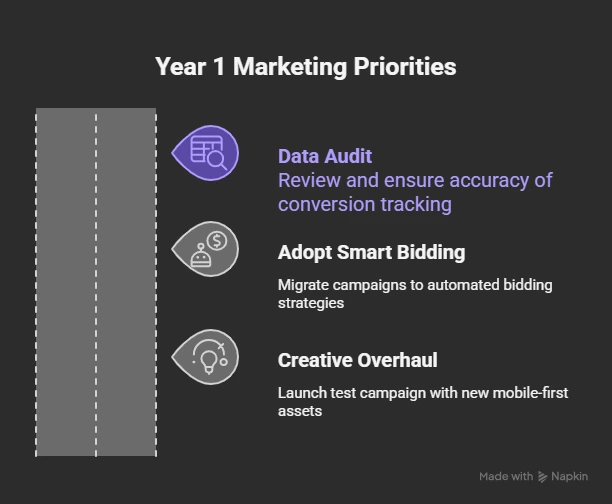
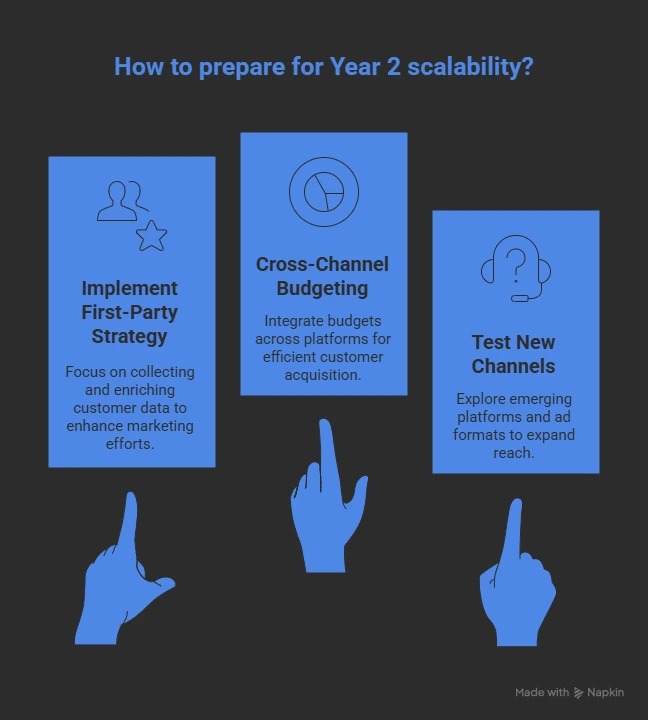
How to Evaluate Your PPC Partner
Whether you’re hiring an in-house expert or looking for a pay per click marketing company, ask these strategic questions:
| Evaluation Area | Must-Ask Question |
| Automation & AI | “What is your philosophy on Performance Max/Advantage+ campaigns? Do you use a custom AI layer, or just the platform’s default?” |
| Data Strategy | “How will you help us leverage our CRM/first-party data for better targeting and attribution?” |
| Regional Nuance | “Can you show us a case study of success specifically in the Philippines or SEA? How do you factor in Taglish/local behavior?” |
Final Call-to-Action
Don’t wait for your competitors to catch on. Today, your action should be simple, high-impact, and immediate:
Audit your data strategy right now If the data flowing into your ad platforms is dirty, all the AI, automation, and future trends won’t save you. Clean data is the new gold standard.
Conclusion
The future of pay per click is defined by speed, intelligence, and integration. It’s moving away from the tactical labor of bid management and towards the strategic mastery of data, creative storytelling, and channel orchestration.
The landscape will continue to shift. The businesses that stay competitive won’t be the ones that react to every platform change, but the ones that adopt a forward-looking mindset, embracing AI as a partner and treating customer data with the respect and strategy it deserves. Evolve with the ecosystem, and you won’t just survive the changes; you’ll lead the charge.