
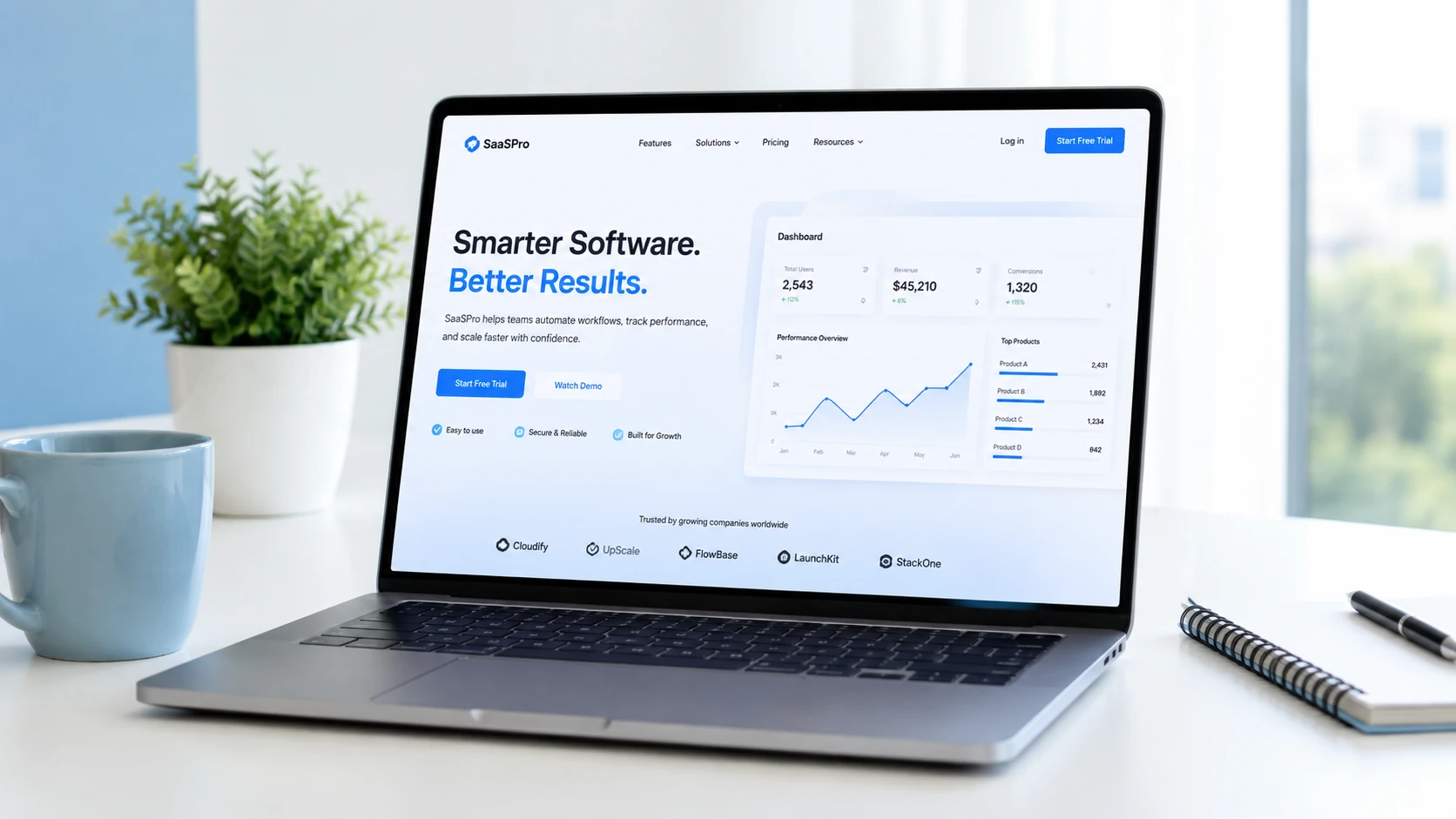
A SaaS website can look polished, modern, and expensive but still struggle to bring in qualified traffic. That usually happens when design decisions are made first and SEO is treated as something to add later. Strong SaaS web design should start with search visibility, user experience, and site structure in mind because those decisions affect how easily people and search engines understand the website.
This becomes even more important when an existing SaaS site is redesigned or migrated. Search Engine Journal recently highlighted how missing redirects, leftover noindex tags, incorrect canonicals, content changes, and late SEO involvement can contribute to major traffic losses after a migration. In severe cases, recovery can take months.
At Tech Support Plus IT Services, we see a website as more than a visual asset. It should help people discover the business, understand the product, and move toward a clear next step.
SaaS Web Design Needs to Do More Than Look Good
First impressions matter. A clean layout, strong branding, and professional visuals can make a SaaS business feel more credible. But good looks won’t help much if users can’t quickly understand what the software does or where they should go next.
Effective SaaS web design connects appearance with usability and search intent. Visitors shouldn’t need to dig through several pages just to understand a product’s main benefits.
A strong SaaS website should make a few things immediately clear:
- What the software does
- Who the product is built for
- Which problems it solves
- Where users can learn more, request a demo, or sign up
That foundation also makes digital marketing services more effective because traffic from search, paid advertising, social media, and other channels arrives on a site built to guide users instead of simply impressing them.
SEO Should Shape the Structure Before the Design Is Finished
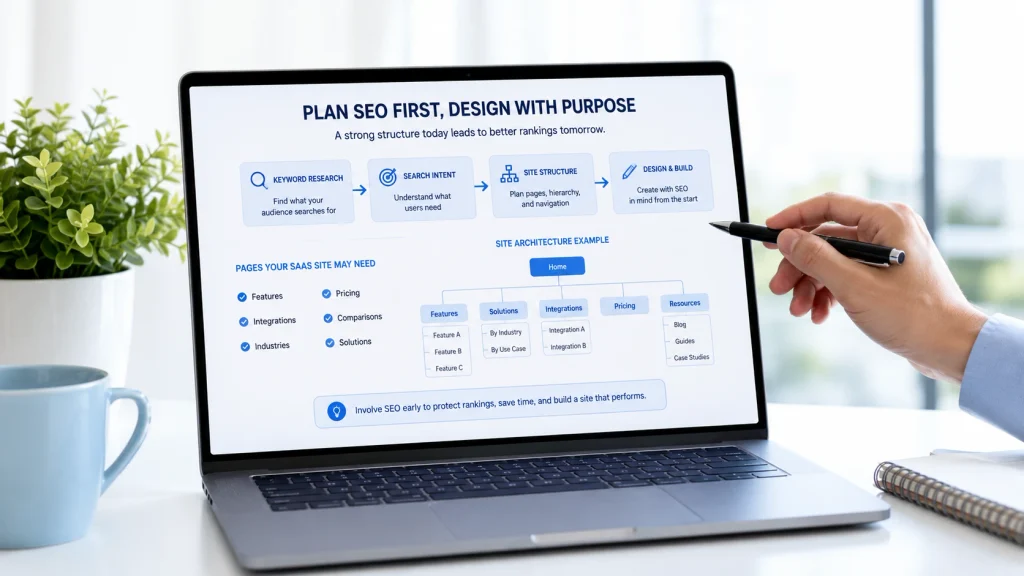
SEO shouldn’t begin after the designer sends over the final mockup.
Keyword research, competitor analysis, and search intent can help determine which pages a SaaS site actually needs. A company may need separate pages for features, integrations, industries, pricing, comparisons, or specific solutions.
Those decisions affect navigation, internal linking, URLs, and page hierarchy, so they should happen early.
The same principle matters during redesigns. Website migrations are often handled as technical projects instead of strategic business decisions. When SEO specialists are brought in too late, valuable content, URLs, links, and ranking signals can be unintentionally lost.
Planning SEO before layouts are finalized gives designers a stronger structure to work with and reduces the amount of fixing required after launch.
SaaS Web Design Works Better When Users Can Find What They Need Fast
SaaS buyers usually arrive with questions. They may want to know whether the software works for their industry, connects with another platform, fits their budget, or solves a specific operational problem.
Good SaaS web design makes those answers easy to reach.
Navigation should guide visitors naturally from broad information to more specific details. A feature page might lead to an integration page, a customer story, pricing information, or a demo request. Those connections improve the user journey while also giving search engines clearer signals about how pages relate to one another.
At Tech Support Plus IT Services, we look at these pathways because attracting traffic is only part of the job. If visitors arrive and immediately feel lost, stronger rankings won’t automatically create stronger results.
Why Web Development and Responsive UI Matter for Search Performance
SEO strategy still depends on how well the website is built.
Strong web development can help search engines access important pages while giving users a fast, stable experience. Poor technical execution can weaken even the best content and design.
Teams should pay particular attention to:
- Page loading speed
- Mobile usability
- Broken links and redirects
- Crawlable page content
- Indexing settings
- Clear internal linking
Mobile experience matters too. A good approach for responsive UI design in the Philippines should make important content, buttons, menus, and forms easy to use across different screen sizes.
Search Engine Journal also warns that redesigns and new CMS platforms can sometimes make websites slower. That creates a frustrating situation where the new site looks better but performs worse for both users and organic search.
Performance needs to be part of the design conversation, not an afterthought.
Strong SaaS Website Development Connects Design With Growth

A SaaS company rarely stays exactly the same. New features launch, integrations expand, industries are added, and marketing campaigns create demand for new landing pages.
That means SaaS website development should leave room for growth.
A flexible structure makes it easier to add content without creating duplicate pages, confusing navigation, or unnecessary competition between similar topics. This is where web design and SEO work especially well together. One shapes the user experience while the other helps organize information in a way that supports long-term discovery.
Tech Support Plus IT Services takes this longer view when planning websites. Building for future growth can prevent businesses from constantly restructuring the site whenever the marketing strategy expands.
What SaaS Web Design Teams Should Plan Before Launch
Before launching, teams should review more than colors, fonts, images, and buttons. Important SEO elements need their own final check.
A practical pre-launch review should include:
- URLs and redirects
- Titles and headings
- Canonical and indexing settings
- Internal links
- XML sitemap
- Mobile and speed performance
- Analytics and conversion tracking
This is especially important during a redesign or migration. Search Engine Journal recommends involving SEO teams before the migration begins, documenting existing URLs, testing redirects, checking robots settings, reviewing structured data, and monitoring the site after launch.
SEO doesn’t need to compete with good design. The two should support each other from the beginning.
If your SaaS business is preparing for a new website, redesign, or migration, Tech Support Plus IT Services can help bring SEO, development, usability, and design into one strategy. Build a website that looks professional, but make sure it can also be found, understood, and built to grow.